
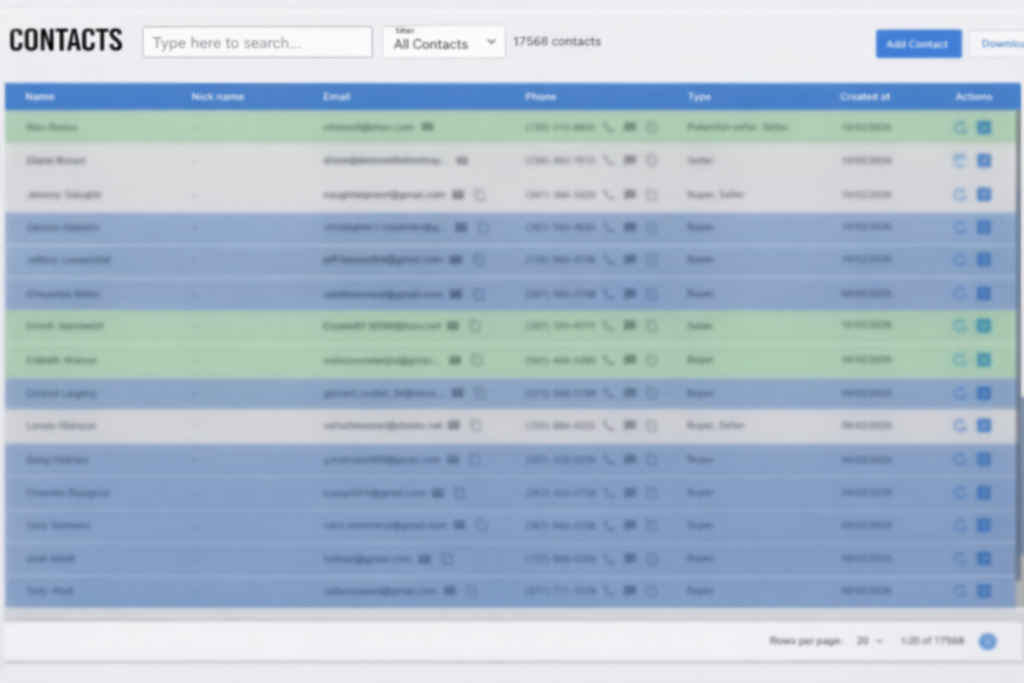
DealRelations CRM vs SaleStream CRM: A Practical Comparison for Business Brokers
Choosing the right CRM is no longer just about contact management—it directly impacts how efficiently a brokerage firm onboards sellers, markets listings, manages buyers, and closes transactions. Below is a practical, experience-based comparison between DealRelations and SaleStream CRM, focused on real workflows inside modern business brokerage firms. 1. Seller Onboarding: Manual vs Structured DealRelations assumes brokers already have seller information collected and organized. There is no native seller onboarding, no structured intake, and no seller-facing workflow to move from valuation to listing. Result:Brokers rely on emails, PDFs, spreadsheets, and phone calls to gather data—leading to delays, missing information, and inconsistent listings. SaleStream CRM Difference:SaleStream begins with seller onboarding. Sellers complete a structured Business Valuation Intake (BVI), which automatically creates a listing in the CRM and provisions secure deal rooms—before a broker even starts marketing. 2. Listing Creation & Content Intelligence In DealRelations, listings are created manually by brokers from scratch. There is no intelligence layer assisting with descriptions, buyer profiling, or market context. SaleStream CRM Difference:SaleStream uses AI to transform seller-submitted data into near-ready listings, automatically generating: This dramatically reduces broker time and improves consistency across listings. 3. Website Listings, SEO, and Buyer Experience DealRelations offers a method to display listings on a brokerage website, but it relies on code that effectively publishes listings as images. These are: SaleStream CRM Difference:SaleStream provides a true WordPress widget that creates real, indexable content. Listings enhance SEO, load faster, and provide a modern, buyer-friendly experience that encourages NDA completion. 4. Listing Order, Priority, and Featured Control DealRelations does not allow firms to control listing order or prioritize key opportunities. SaleStream CRM Difference:Brokerage firms can: This gives firms full control over how their inventory is presented to buyers. 5. NDA Flow & Buyer Drop-Off DealRelations relies on email-driven NDA workflows with multiple steps. Buyers often sign NDAs but never return to view the deal. SaleStream CRM Difference:SaleStream delivers a single-flow experience:NDA → CIM → Deal Room access happens immediately, inside the same session—significantly reducing buyer drop-off. 6. Deal Rooms & Document Security DealRelations does not offer fully automated, lifecycle-aware deal rooms. Firms typically rely on third-party tools with manual permission management. SaleStream CRM Difference:SaleStream automatically creates secure, SharePoint-based deal rooms for: Access automatically expires or revokes based on deal status—ensuring security and compliance. 7. Notes, Communication, and Call Intelligence DealRelations has limited listing-level context tracking and no native call intelligence. SaleStream CRM Difference:SaleStream centralizes communication: Every interaction becomes searchable, trackable data. 8. Deal Execution & Closing Management DealRelations offers minimal support for managing post-LOI workflows and deadlines. SaleStream CRM Difference:SaleStream includes project and task templates with relative-date logic. When a deal goes under contract, tasks and deadlines are automatically calculated, assigned, and tracked—reducing risk and improving close rates. Final Verdict DealRelations CRM functions as a basic information repository for brokers.SaleStream CRM is a full operating system for business brokerage firms—designed to onboard sellers, attract buyers, manage risk, and close deals efficiently.