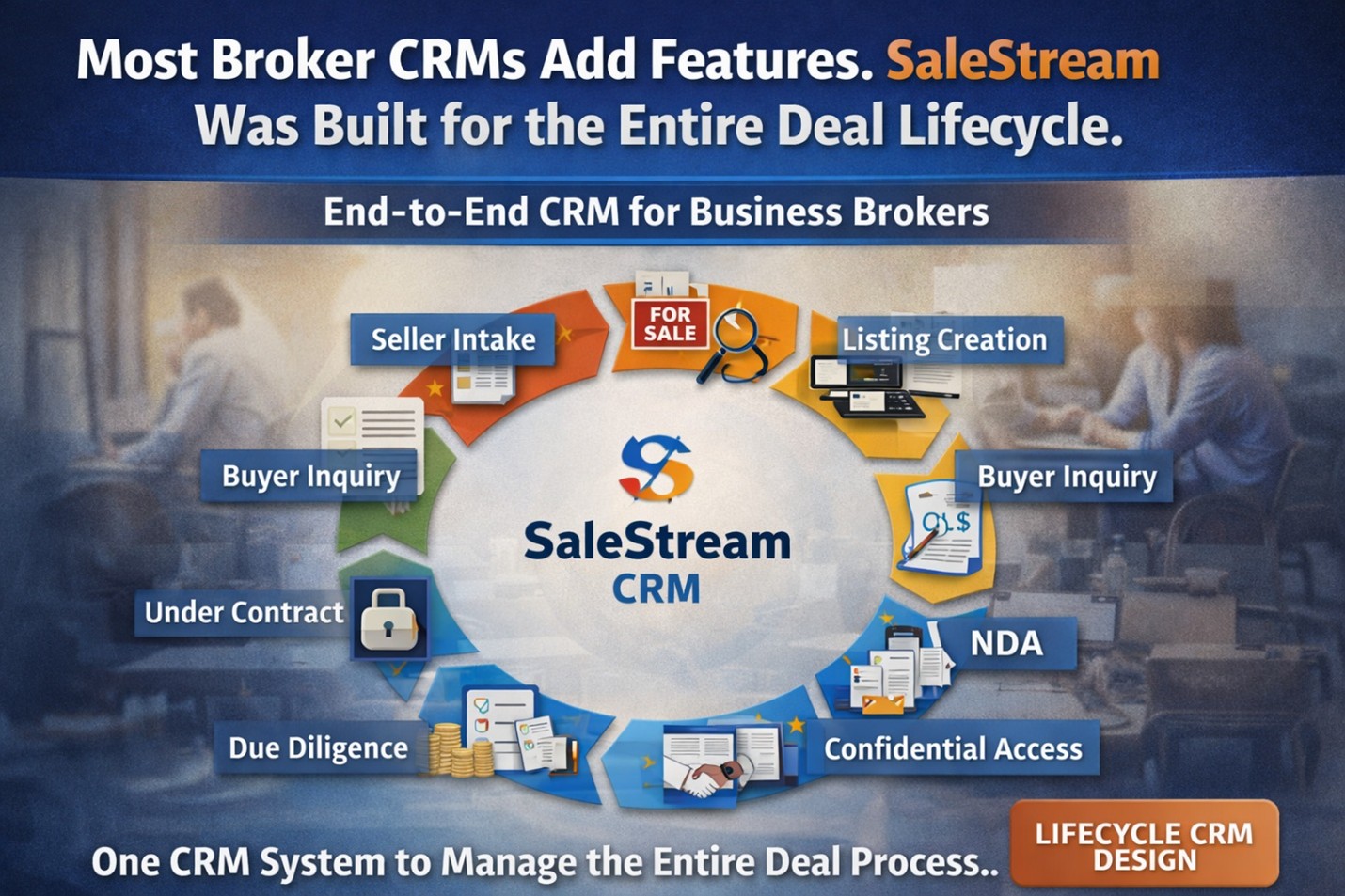
Most Broker CRMs Add Features. SaleStream Was Built for the Entire Deal Lifecycle.
Feature Lists Don’t Close Deals. Lifecycle Design Does.
If you compare CRM solutions for business brokers, most marketing pages look similar.
They mention:
- Buyer management
- Email campaigns
- Pipeline dashboards
- Document storage
- Task reminders
On paper, many platforms appear equivalent.
But here’s the critical difference:
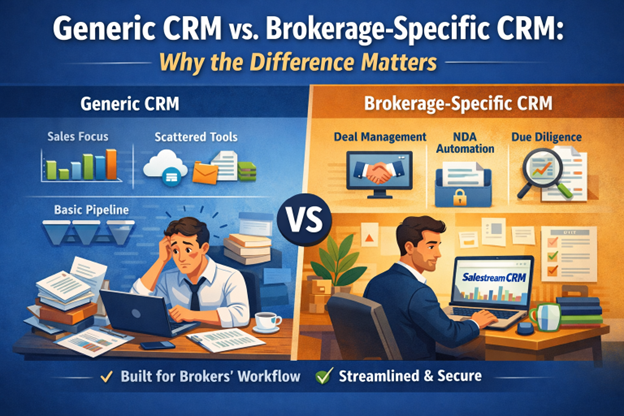
Most broker CRMs are feature collections.
SaleStream is lifecycle architecture.
The Problem With Feature-Based CRM Design
Many platforms in the brokerage space started as:
- Sales CRMs
- Real estate CRMs
- Generic contact management systems
Over time, they added:
- NDA tracking
- Document uploads
- Listing modules
- Basic task management
But these additions are often layered onto an original structure that was never designed for brokerage transactions.
The result?
Disconnected components that require manual oversight to keep deals moving.
What Business Brokerage Actually Requires
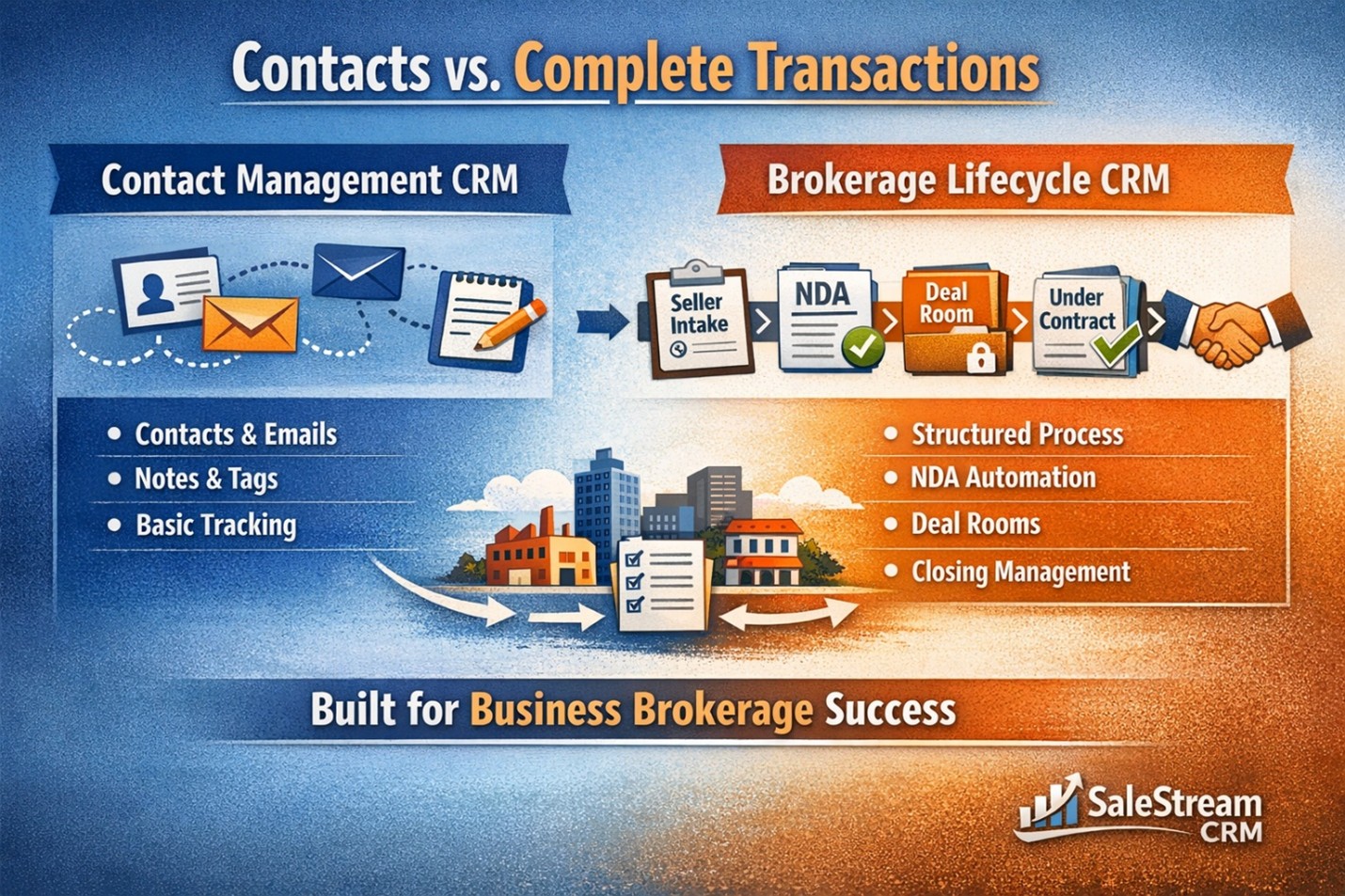
A brokerage transaction moves through defined phases:
Seller Intake → Listing Creation → Buyer Inquiry → NDA → Confidential Access → Under Contract → Due Diligence → Closing
Each phase is connected.
If one stage is weak, the entire transaction slows down.
A CRM designed for brokerage must reflect that lifecycle structurally—not cosmetically.
How SaleStream Is Architecturally Different
SaleStream was not adapted from another industry.
It was built around the brokerage deal lifecycle from the ground up.
1. Seller Intake as the Starting Point
Many CRM solutions begin at the listing stage.
SaleStream begins earlier—with structured seller intake.
That means:
- Consistent data capture
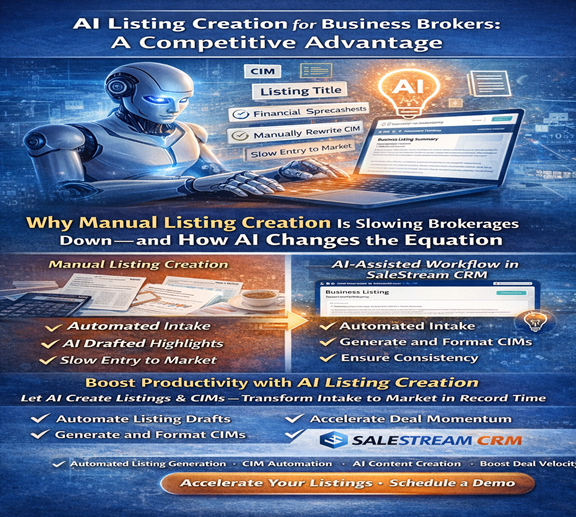
- Automated listing generation
- Reduced duplication
- Faster preparation
Lifecycle design begins at the origin.
2. NDA as a Gateway, Not a Document
In many platforms, NDA tracking exists—but is treated as administrative.
SaleStream treats NDA execution as a structured transition within the deal lifecycle.
That keeps buyer momentum intact and reduces drop-off.
3. Deal Rooms Integrated Into Progression
Document storage alone is not enough.
SaleStream’s deal rooms are part of the transaction flow, supporting controlled disclosure at the right stage.
That creates structure—not just storage.
4. Under-Contract Execution Built In
Many broker CRMs excel at marketing and tracking.
Few support true execution.
SaleStream incorporates:
- Structured task progression
- Defined deal stage transitions
- Visibility across the team
- Consistent closing workflows
This ensures deals don’t lose momentum once complexity increases.
Why Lifecycle Architecture Matters
When a CRM is built around features rather than flow:
- Brokers rely on memory
- External tools fill gaps
- Spreadsheets reappear
- Communication fragments
- Momentum slows
When a CRM is built around lifecycle structure:
- Each stage supports the next
- Workflow becomes repeatable
- Errors decrease
- Capacity increases
- Deals close more consistently
Over dozens of transactions per year, the difference compounds significantly.
The Competitive Reality
Many CRM solutions for business brokers promote robust dashboards and automation tools.
Those features are helpful.
But without lifecycle cohesion, brokers are still managing process manually.
SaleStream was designed to connect every stage into one structured operating system for brokerage firms.
Not a toolkit.
A system.
Final Thought
If your current CRM feels like:
Contacts + Emails + Files + Tasks stitched together…
…it may not be built for brokerage at its core.
Modern brokerages benefit from:
Lifecycle continuity
Workflow integrity
Transaction control
Operational clarity
SaleStream CRM was built around those principles.
Call to Action
If you want to see what a true brokerage lifecycle CRM looks like in practice, request a personalized demo of SaleStream CRM.