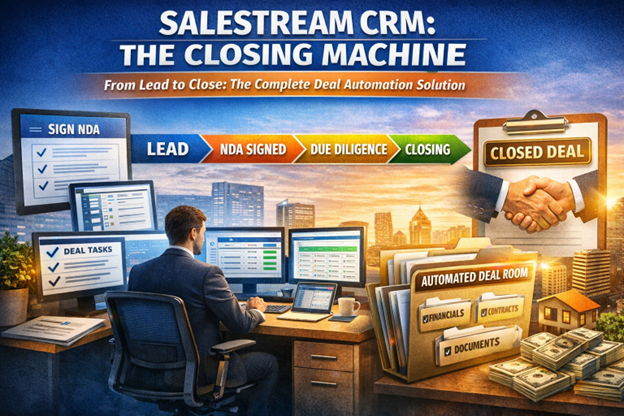
SaleStream CRM for Business Brokers | Close More Deals with Automation
Why SaleStream CRM Is a Closing Machine (While Other CRMs Just Manage Contacts)

Why SaleStream CRM Is a Closing Machine (While Other CRMs Just Manage Contacts)
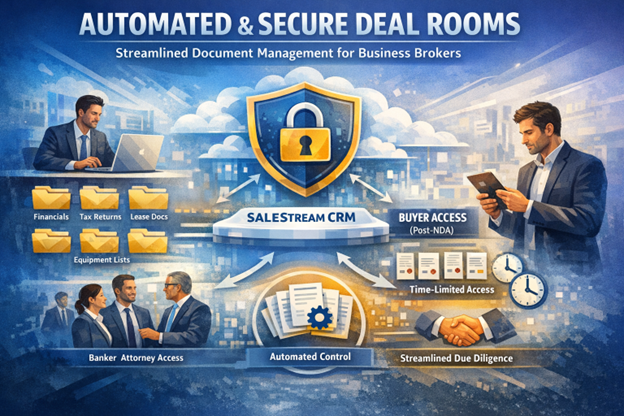
Most Broker CRMs Store Files. SaleStream Manages Deal Rooms.
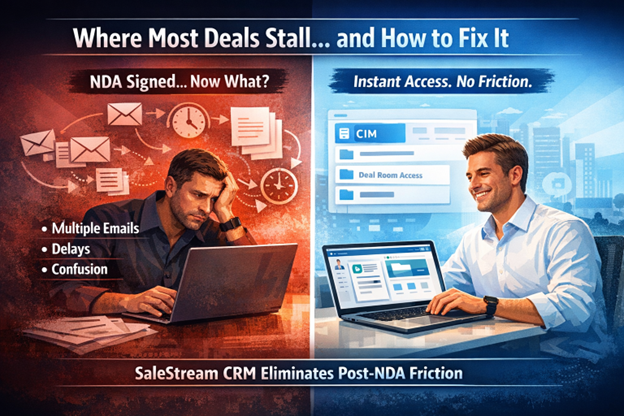
The Moment Buyers Drop Off (And Why Your CRM Is Causing It)
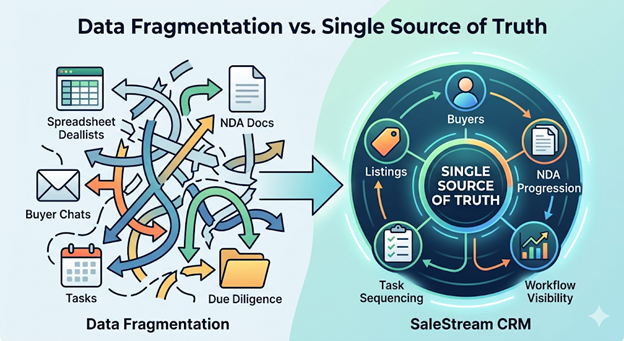
If Your Brokerage Data Lives in 5 Places, Your CRM Isn’t Doing Its Job
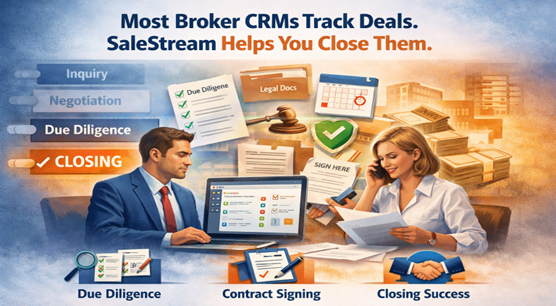
Most Broker CRMs Track Deals. SaleStream Helps You Close Them.
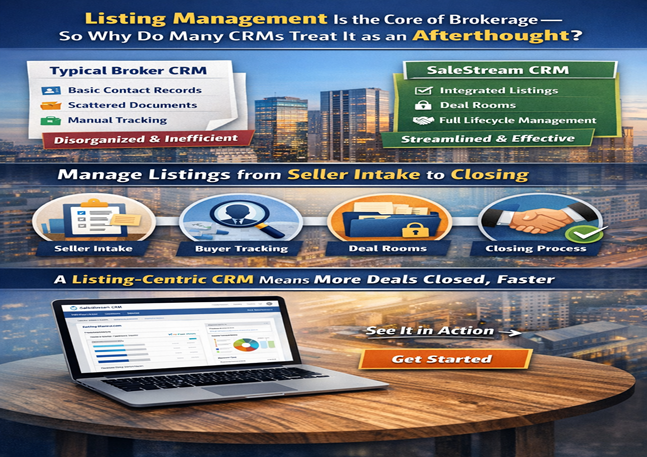
Listing Management Is the Core of Brokerage—So Why Do Many CRMs Treat It as an Afterthought?
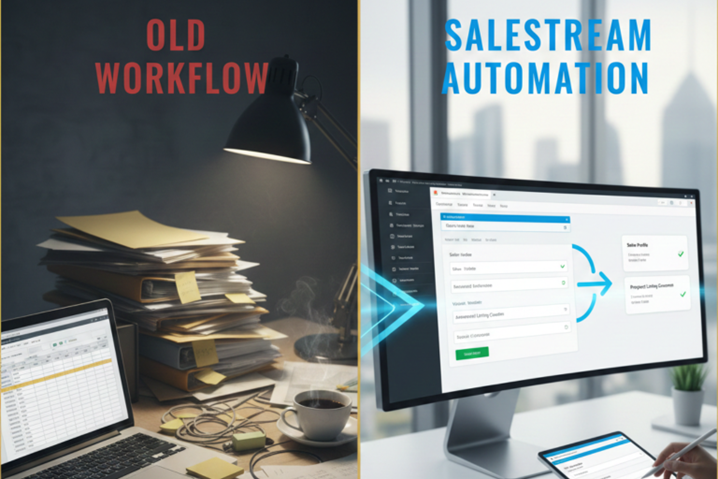
Seller Intake Automation: The Competitive Edge Brokers Didn’t Know They Needed Most CRM solutions for business brokers begin at the same place: The listing. But listings don’t appear out of thin air.They start with messy seller information, incomplete documentation, and repeated follow-ups. And this is where most broker CRMs quietly fail. The Hidden Bottleneck in Brokerage Workflows Before a listing ever goes live, brokers must: In many CRM systems, this process happens: That means duplication, re-entry, and delays. Most platforms focus heavily on: Few address structured seller onboarding as a core workflow. Why This Matters More Than Brokers Realize Manual seller intake creates downstream problems: Every extra hour spent rebuilding seller information is an hour not spent advancing deals. How SaleStream Solves the Seller Intake Problem SaleStream CRM was designed differently. Instead of starting at the listing, it starts at the seller intake stage. Structured Business Valuation Intake (BVI) SaleStream includes a structured intake framework that allows: This is not a form bolted onto a CRM. It is part of the system’s architecture. Automatic Prospect Listing Creation Once seller data is captured: This eliminates retyping, copy-pasting, and redundant data entry. Most competing CRMs require brokers to: SaleStream reduces that friction significantly. Competitive Reality: Where Other Platforms Fall Short Many CRM solutions for business brokers emphasize: Those features are useful—but they do not reduce the administrative burden of seller onboarding. Without structured intake automation, brokers still spend hours preparing listings before a deal ever reaches buyers. The Strategic Advantage for Brokerages Brokerages that automate seller intake gain: When intake becomes structured and repeatable, the entire deal lifecycle improves. Why This Feature Is Often Overlooked Seller onboarding isn’t flashy. It doesn’t appear on marketing pages as prominently as dashboards or automation sequences. But it is foundational. And foundational improvements create compounding advantages across every listing. Final Thought If your CRM begins at the listing stage, you are already one step behind. Modern brokerages need systems that manage: Seller → Intake → Listing → NDA → Deal Room → Under Contract → Closing SaleStream was built around that full lifecycle. Not just contact management. Want to see how structured seller intake can transform your brokerage workflow? Request a personalized demo of SaleStream CRM and explore a platform built for the full deal lifecycle.
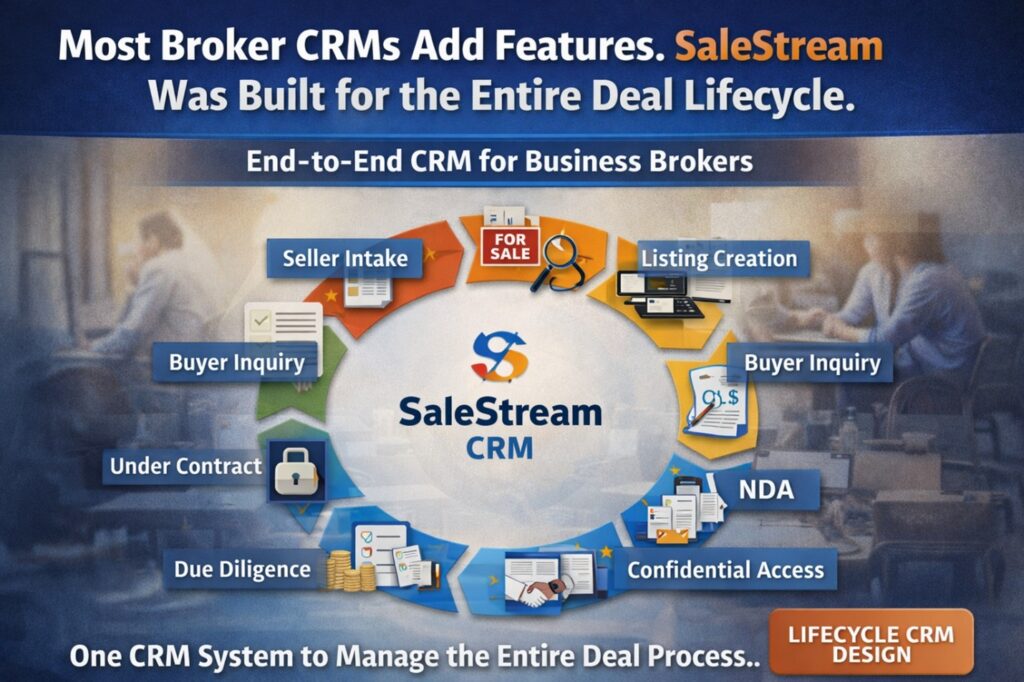
Most Broker CRMs Add Features. SaleStream Was Built for the Entire Deal Lifecycle. Feature Lists Don’t Close Deals. Lifecycle Design Does. If you compare CRM solutions for business brokers, most marketing pages look similar. They mention: On paper, many platforms appear equivalent. But here’s the critical difference: Most broker CRMs are feature collections.SaleStream is lifecycle architecture. The Problem With Feature-Based CRM Design Many platforms in the brokerage space started as: Over time, they added: But these additions are often layered onto an original structure that was never designed for brokerage transactions. The result? Disconnected components that require manual oversight to keep deals moving. What Business Brokerage Actually Requires A brokerage transaction moves through defined phases: Seller Intake → Listing Creation → Buyer Inquiry → NDA → Confidential Access → Under Contract → Due Diligence → Closing Each phase is connected. If one stage is weak, the entire transaction slows down. A CRM designed for brokerage must reflect that lifecycle structurally—not cosmetically. How SaleStream Is Architecturally Different SaleStream was not adapted from another industry. It was built around the brokerage deal lifecycle from the ground up. 1. Seller Intake as the Starting Point Many CRM solutions begin at the listing stage. SaleStream begins earlier—with structured seller intake. That means: Lifecycle design begins at the origin. 2. NDA as a Gateway, Not a Document In many platforms, NDA tracking exists—but is treated as administrative. SaleStream treats NDA execution as a structured transition within the deal lifecycle. That keeps buyer momentum intact and reduces drop-off. 3. Deal Rooms Integrated Into Progression Document storage alone is not enough. SaleStream’s deal rooms are part of the transaction flow, supporting controlled disclosure at the right stage. That creates structure—not just storage. 4. Under-Contract Execution Built In Many broker CRMs excel at marketing and tracking. Few support true execution. SaleStream incorporates: This ensures deals don’t lose momentum once complexity increases. Why Lifecycle Architecture Matters When a CRM is built around features rather than flow: When a CRM is built around lifecycle structure: Over dozens of transactions per year, the difference compounds significantly. The Competitive Reality Many CRM solutions for business brokers promote robust dashboards and automation tools. Those features are helpful. But without lifecycle cohesion, brokers are still managing process manually. SaleStream was designed to connect every stage into one structured operating system for brokerage firms. Not a toolkit. A system. Final Thought If your current CRM feels like: Contacts + Emails + Files + Tasks stitched together… …it may not be built for brokerage at its core. Modern brokerages benefit from: Lifecycle continuityWorkflow integrityTransaction controlOperational clarity SaleStream CRM was built around those principles. Call to Action If you want to see what a true brokerage lifecycle CRM looks like in practice, request a personalized demo of SaleStream CRM.
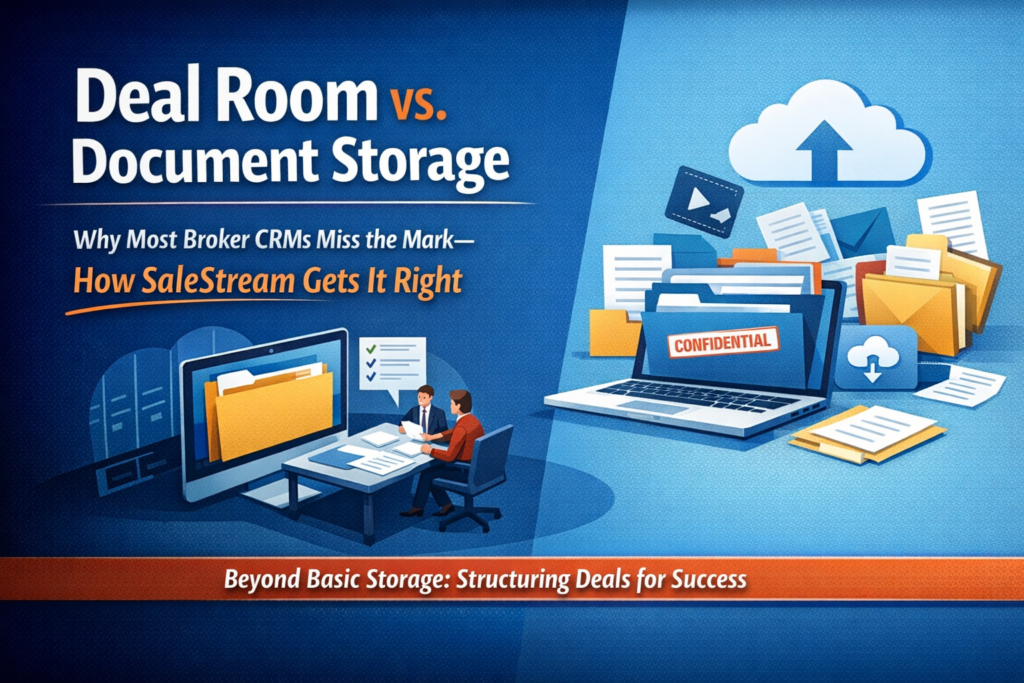
Most CRM solutions for business brokers advertise “document storage” as a key feature. At first glance, that sounds sufficient.Upload files. Share files. Done. But in brokerage, document handling isn’t about storage.It’s about control, timing, structure, and deal progression. And that’s where many broker CRM platforms fall short. What Many Broker CRMs Actually Provide In many systems marketed to business brokers, document management typically means: While helpful, this approach treats documents as passive files. Brokerage transactions require something more structured. Why Basic Document Storage Creates Risk When document workflows aren’t structured: In complex transactions involving sensitive financials, lease agreements, tax returns, and legal documents, structure is critical. Without it, friction increases—and friction slows deals. The Difference: A True Brokerage Deal Room A true deal room is not just a folder.It is a controlled transaction environment. SaleStream CRM approaches deal rooms as a structured part of the deal lifecycle—not a storage feature. How SaleStream’s Deal Rooms Stand Apart 1. Structured by Deal Stage Instead of dumping files into one shared folder, SaleStream organizes documents within a defined workflow. This ensures: 2. Controlled Access Access is not simply granted—it is managed. SaleStream allows brokers to: Many CRM solutions rely on manual document sharing or external systems, increasing operational complexity. 3. Integrated into the Deal Lifecycle In generic CRM systems, documents sit outside the deal’s progression logic. In SaleStream: This keeps deals organized and moving forward. 4. Cleaner Closing Experience When documents are structured and controlled throughout the lifecycle: Deal room clarity reduces unnecessary back-and-forth communication. The Competitive Reality Many CRM solutions for business brokers emphasize: Those features are useful. But without structured deal rooms integrated into workflow progression, brokerages still rely on external tools and manual oversight to protect confidentiality and manage transaction flow. SaleStream was built specifically to remove that gap. Why This Matters for Brokerages Brokerages that implement structured deal rooms gain: Over time, these advantages compound. Final Thought If your current CRM offers document storage but not a structured deal room integrated into your brokerage workflow, you are managing risk manually. Modern brokerages need systems that combine: Seller Intake → NDA → Structured Deal Room → Under Contract → Closing SaleStream CRM was built around that complete lifecycle. Not just file uploads.
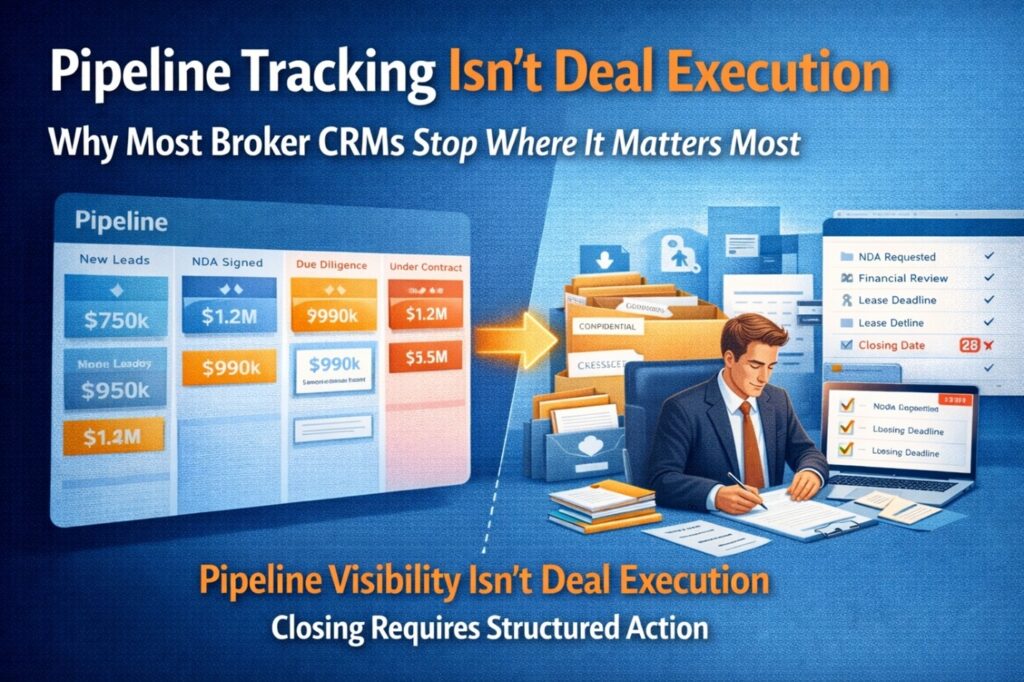
Pipeline Tracking Isn’t Deal Execution: Why Most Broker CRMs Stop Where It Matters Most Book a Meeting: