Most CRM solutions for business brokers advertise “document storage” as a key feature.
At first glance, that sounds sufficient.
Upload files. Share files. Done.
But in brokerage, document handling isn’t about storage.
It’s about control, timing, structure, and deal progression.
And that’s where many broker CRM platforms fall short.
What Many Broker CRMs Actually Provide
In many systems marketed to business brokers, document management typically means:
- A file upload section attached to a listing
- Basic sharing links
- External integrations with third-party file tools
- Manual tracking of who has received what
While helpful, this approach treats documents as passive files.
Brokerage transactions require something more structured.
Why Basic Document Storage Creates Risk
When document workflows aren’t structured:
- Buyers may receive information out of sequence
- Sellers worry about confidentiality
- Brokers manually manage access
- Access removal becomes an afterthought
- Version control becomes inconsistent
In complex transactions involving sensitive financials, lease agreements, tax returns, and legal documents, structure is critical.
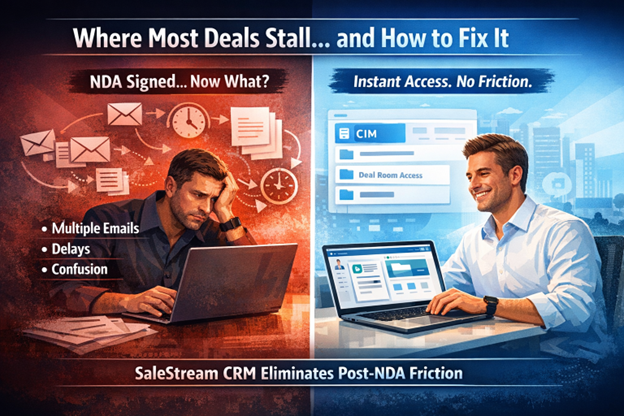
Without it, friction increases—and friction slows deals.
The Difference: A True Brokerage Deal Room
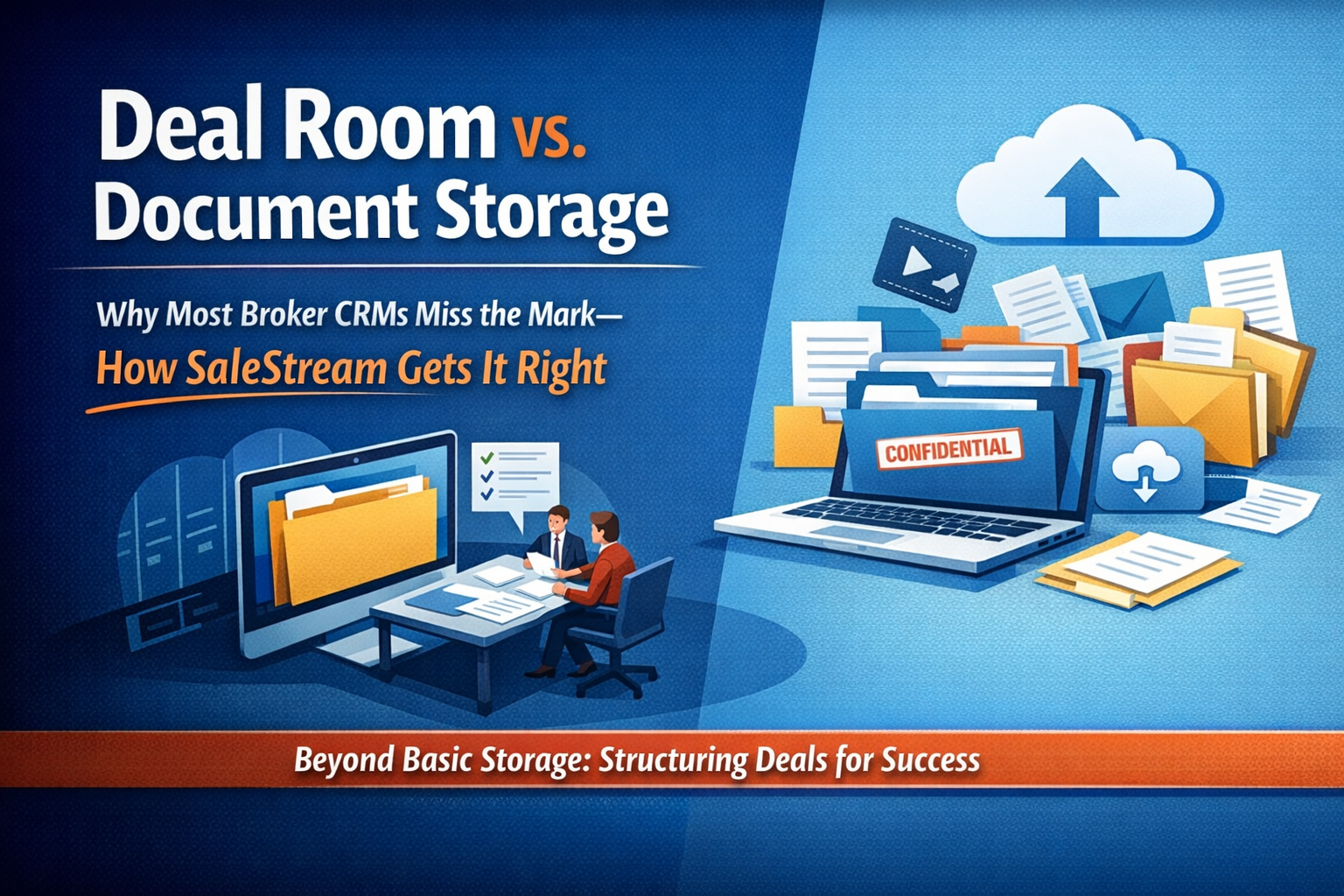
A true deal room is not just a folder.
It is a controlled transaction environment.
SaleStream CRM approaches deal rooms as a structured part of the deal lifecycle—not a storage feature.
How SaleStream’s Deal Rooms Stand Apart
1. Structured by Deal Stage
Instead of dumping files into one shared folder, SaleStream organizes documents within a defined workflow.
This ensures:
- The right documents are shared at the right time
- Buyers are guided through the process
- Brokers maintain oversight
2. Controlled Access
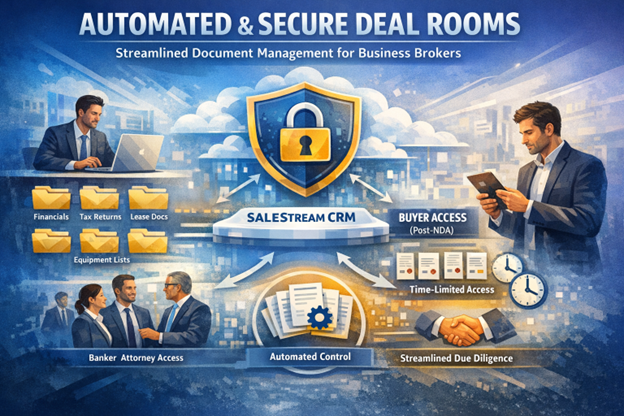
Access is not simply granted—it is managed.
SaleStream allows brokers to:
- Control document visibility
- Limit access by role
- Maintain confidentiality standards
- Prevent accidental overexposure of sensitive materials
Many CRM solutions rely on manual document sharing or external systems, increasing operational complexity.
3. Integrated into the Deal Lifecycle
In generic CRM systems, documents sit outside the deal’s progression logic.
In SaleStream:
- Deal rooms are tied to the transaction flow
- NDA completion connects directly to controlled access
- Under-contract stages are aligned with document requirements
This keeps deals organized and moving forward.
4. Cleaner Closing Experience
When documents are structured and controlled throughout the lifecycle:
- Closing becomes smoother
- Buyers remain confident
- Sellers feel protected
- Brokers operate more efficiently
Deal room clarity reduces unnecessary back-and-forth communication.
The Competitive Reality
Many CRM solutions for business brokers emphasize:
- Buyer tracking
- Email automation
- Pipeline visualization
- Reporting dashboards
Those features are useful.
But without structured deal rooms integrated into workflow progression, brokerages still rely on external tools and manual oversight to protect confidentiality and manage transaction flow.
SaleStream was built specifically to remove that gap.
Why This Matters for Brokerages
Brokerages that implement structured deal rooms gain:
- Stronger confidentiality control
- Fewer document-related delays
- Reduced manual management
- Greater seller trust
- More professional buyer experience
Over time, these advantages compound.
Final Thought
If your current CRM offers document storage but not a structured deal room integrated into your brokerage workflow, you are managing risk manually.
Modern brokerages need systems that combine:
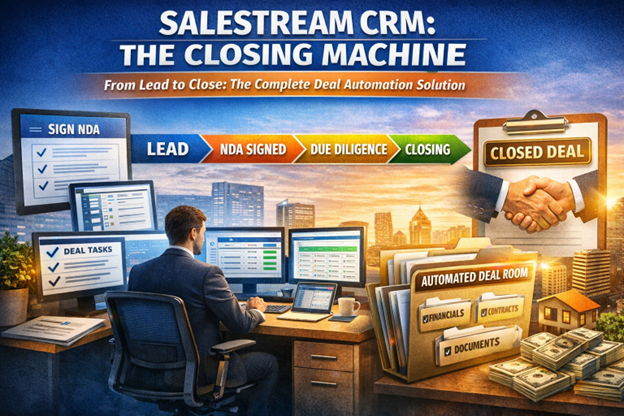
Seller Intake → NDA → Structured Deal Room → Under Contract → Closing
SaleStream CRM was built around that complete lifecycle.
Not just file uploads.